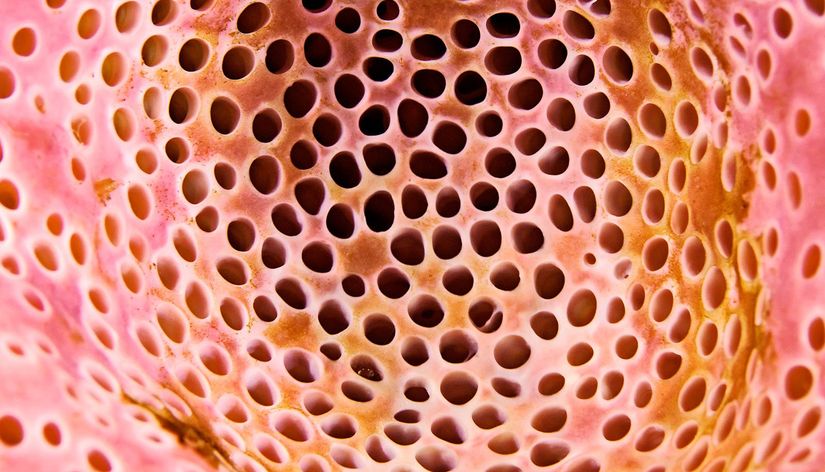
One of nature’s simplest appearances — holes, cavities, small gaps — can create feelings of discomfort, unease, and intense fear for some people. This phenomenon is called trypophobia, or the “fear of holes.” But why does this occur, what are its symptoms, and how can it be managed? Let’s explore together.
Fear of Holes: How Did It Start?
Hole patterns on surfaces like strawberries, honeycombs, sponges, and corals may appear ordinary to some people, but for others, these visuals can provoke discomfort, sudden tension, or repulsion. While these reactions are temporary for most people, for individuals with trypophobia, the sight can trigger the brain’s automatic reflexes.
The Concept of Phobia: How Is It Different from Normal Fear?
Normal fear is a healthy response that activates our survival mechanisms in the face of danger or uncertainty. A phobia, however, is an “excessive, irrational, and persistent” form of fear. Trypophobia is a specific type of phobia focused on hole patterns. For a condition to be classified as a phobia, the following criteria are generally required:
- Intense reaction when confronted with the trigger
- Avoidance behaviors toward the situation
- Fear that interferes with daily functioning
Trypophobia: What Is It and How Does It Appear?
Trypophobia is an excessive fear and disgust toward clusters of holes, patterned cavities, or repeated gaps on surfaces. Common examples include:
- Honeycombs, sponges, corals
- Fruits with multiple holes, like strawberries and pomegranates
- Seeded breads, textured surfaces
- Pitted stones, spongy materials
Some people may experience strong emotional reactions or physical responses when looking at these objects.
What Are the Symptoms?
Individuals with trypophobia may experience the following when encountering hole patterns:
- Intense fear, anxiety, or discomfort
- Disgust or revulsion
- Sweating, trembling, heart palpitations
- Difficulty breathing, tightness in the chest
- Nausea, dizziness
- Itching, shivering
- Panic-like episodes
These symptoms can be triggered not only when seeing the object directly but also when imagining it.
Where Does This Fear Come From? Possible Causes
The exact origin of trypophobia is still debated in science. However, several tendencies are noted:
- Evolutionary explanations: Hole patterns may have been associated with danger, parasites, or poisonous creatures in ancient times, causing the brain to automatically send a “pay attention” signal.
- Personal experiences: Negative experiences, observations, or fear perceptions during childhood can be triggers.
- Visual sensitivity: Some individuals are more sensitive to visual patterns, and complex textures can cause discomfort.
- Psychological predisposition: Anxiety disorders, other phobias, or emotional dysregulation can increase the likelihood of trypophobia.
Strategies for Coping with Trypophobia
It is possible to manage trypophobia. Some recommended strategies include:
- Gradual exposure (desensitization): Practice controlled and short-term exposure to hole patterns.
- Cognitive approach: Identify negative and irrational thoughts related to holes and replace them with more rational ones.
- Relaxation techniques: Deep breathing, progressive muscle relaxation, and meditation help calm the body during high anxiety moments.
- Visualization and positive imagery: Looking at hole patterns combined with calming mental images can reduce discomfort.
- Professional support: If the fear disrupts daily life, working with a psychologist or therapist is recommended. Cognitive Behavioral Therapy (CBT) has been effective for many phobias.
Conclusion: Don’t Ignore the Fear of Holes
Like any phobia, trypophobia is common yet often unspoken, and it can have serious effects on individuals. Encountering hole patterns can be more than just unpleasant—it can sometimes feel unavoidable. Early recognition and developing coping strategies are therefore very important.
Remember: Even a seemingly simple visual can create a mental storm, but with the right approach, this storm can be calmed.